
 Nā Hora Kairangi Nicholas tēnei atikara
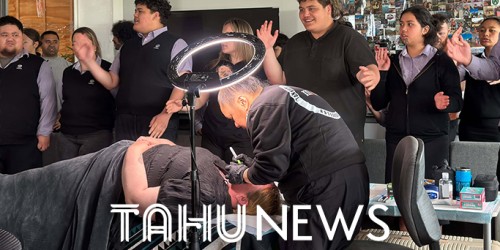
In a classroom at Haeata Community Campus, surrounded by students singing waiata tautoko and whānau gathered to witness the occasion, a mokopapa for Lisa Marie Murch set the scene for the party's most recent policy announcement for toi Māori.
“For far too long we have ignored our creative and innovative part of who we are as a people," says Rawiri Waititi.
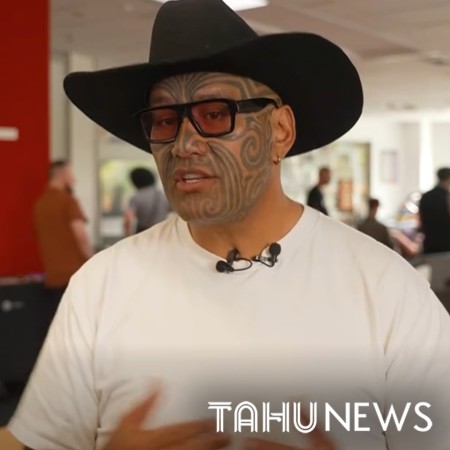
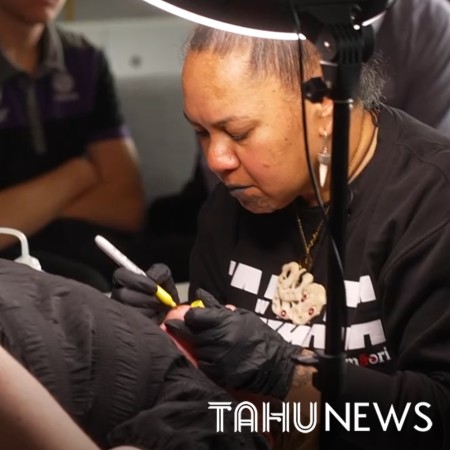
Waititi, one of two party co-leaders, attended the Ōtautahi mokopapa on Monday, taking guitar in hand to tautoko the party’s Te Tai Tonga candidate as she received her moko kauae from Gisborne artist Joni Brooking. From there the party announced their policy highlighting the establishment of an independent Toi Māori Authority and a fund that would provide financial support to up to 1,000 Māori artists.
“Ka roa nei mātou ka whakaaro mō ā tātou tāngata toi, ka kite i te moko e mahimahi ana ki muri i au, ngā kaitito waiata mō te Matatini, tātou kaiwhakairo. You know, Apirana saw this as an issue back in the 1930s, hence why he created the Arts and Crafts Institute,” Waititi says.
But the policy doesn't stop at establishing a new authority and artist support fund. Te Pāti Māori also wants to invest in research examining the contribution of toi Māori to Māori health and wellbeing, strengthen kapa haka and other Māori artforms in communities, and ensure Māori retain control over how Māori creativity is owned, presented and protected.
For Waititi, calls for greater support for artists are not a new conversation.
"The Government must act immediately by making relief funds available for our artists and creatives who have lost work due to the move to Red Light settings," he said in 2022.
This week's launch comes four years after Waititi's call for emergency support during the cancellation of summer festivals under COVID-19 restrictions, a campaign that mobilised recognised artists such as Ria Hall and Cilla Ruha to also speak up on the matter at that time.
The Government later responded with further arts sector support, including a one-off $5,000 payment for eligible self-employed creatives who had lost income and an expanded Arts and Culture Event Support Scheme designed to ensure artists, performers and production crew attached to such events were still paid if those events could not go ahead.
"I guess as a moko practitioner but also a multimedia artist … the struggle is real," says Joni Brooking.
Brooking was one of the many at Monday’s mokopapa, but her role as the kaitā put her into the spotlight for the day.
According to the Ministry for Culture and Heritage, there are more than 3,000 self-employed artists in Aotearoa. For Brooking, there is still little government support available for Māori artists like herself.
“Our identity is inseparable from our art forms. Successive governments have allowed the harm to toi Māori to continue. This is about putting decisions in Māori hands and properly backing the artists who carry our mātauranga forward,” said Waititi in the party’s announcement.
The setting held personal significance for Murch, who previously taught at Haeata Community Campus and continues to work with teachers through professional development.
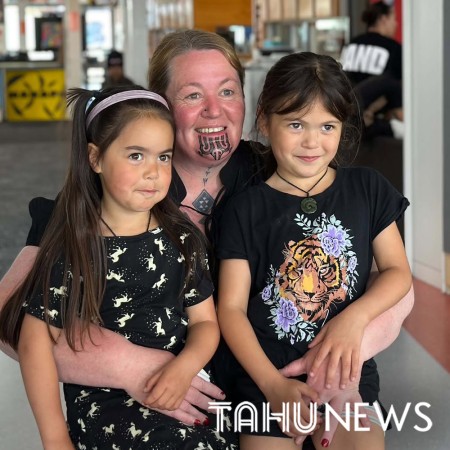
Proudly adorned with her new moko kauae, Murch said the occasion carried significance beyond the campaign trail.
“It feels like it’s always been there, always meant to be there. I will be the first wahine in our family who’s worn it for generations, my cousins have it but through my line I’ll be the first one… feeling really good about it.”
As Te Pāti Māori outlined plans for a new Toi Māori Authority and greater support for artists, Murch's mokopapa served as a reminder of the living Māori artforms the party says must remain in Māori hands.
|
|
|