
 Nā Shakayla Andrews-Alapaki tēnei atikara.
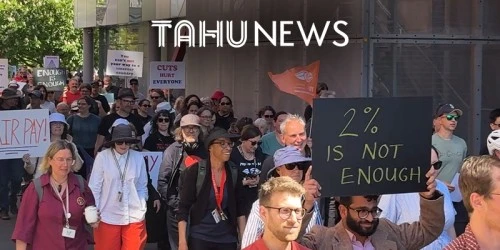
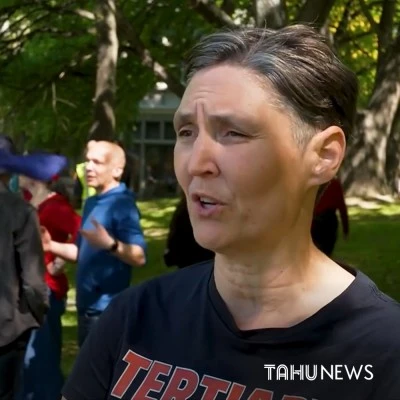
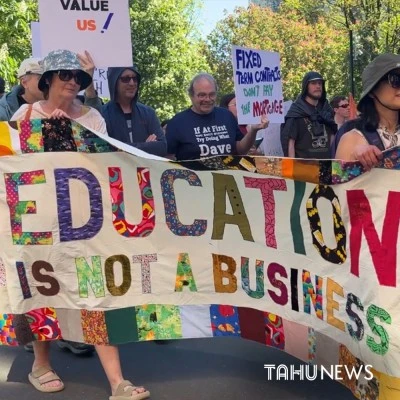
“Me whakarongo ngā upoko o tēnei whare wānanga ki a mātou,” Āwhina Green (Ngāti Porou) said, urging university leaders to listen to their kaimahi. Her call came as nearly 8,000 tertiary education staff from universities and polytechnics across Aotearoa went on strike in what the union describes as a historic first.
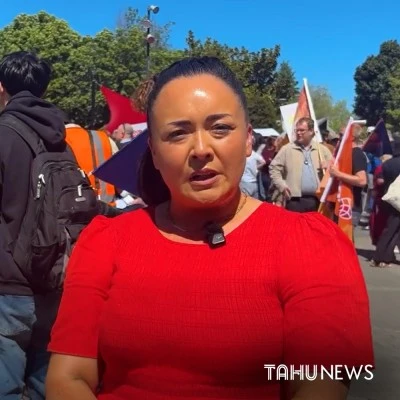
Tertiary Education Union (TEU) national secretary Amy Ross said poor pay offers remained a major concern across the sector.
“None of them come remotely near the cost of living and we know that we're in a cost of living crisis,” Ross said.
“and so they're just saying, ‘hey, you suck it up, have more pay cut on the table in real terms’ and that's not good enough.”
UNIVERSITY STAFF CALL FOR GREATER INVESTMENT IN KAIMAHI
At the University of Canterbury, Green said staff workloads had increased as the university expanded its campus and digital infrastructure over the past three years. Green is a lecturer and teaches te reo Māori and mātauranga within the teaching programme at the university. She said teaching staff were expected to plan lessons, visit students on placement and manage teaching and administrative responsibilities, often pushing them beyond their allocated hours.
“You have hours allocated for that, but quite often it's the case that you're having to go over and above as teaching and admin,” Green said.
Green said the offer received by staff was not substantial compared with other universities, with workers pushing for an increase above the current 2 percent offer.
“Mōku ake nei, you know, the investment in our kaimahi, koina te take nunui.”
Job security is another concern, with the union saying more than half of university staff are employed on temporary fixed-term contracts.
“Whakawhānui ngā kirimana, tūturu ake ngā mahi katoa, piki ake te pūtea.” Green said.
ARA STAFF PUSH FOR PROGRESS AFTER MONTHS OF NEGOTIATIONS
Following the march around the University of Canterbury grounds, staff from Ara Institute of Canterbury also joined the strike. Charmaine Tukua (Ngāi Tahu, Ngāi Tūāhuriri) is a lecturer at Ara, where she has taught tikanga and te reo Māori for more than 25 years. She said negotiations with Ara employers had dragged on for 10 months.
“we've been suspended for the hours that we have gone on strike”
“Some of our kaimahi can't join us, and that's kei te pai. Even if they can't come and join us, we're here to represent them also,” she said.
TEU National Secretary Amy Ross said collective bargaining remained a key issue for polytechnic workers.
“At polytechs, some employers are still refusing to engage in the multi-employer collective agreement (MECA) and instead want to change the structure and conditions of the collective agreement members work under.”
With negotiations still unresolved, University and Polytechnic staff say their fight for fair pay and secure work is far from over.
|
|
|
“Me whakarongo ngā upoko o tēnei whare wānanga ki a mātou,” koinei te karanga o Āwhina Green ki ōna rangatira o Te Whare Wānanga o Waitaha, kia whakarongo ki a rātou kaimahi.
I tukuna te karanga nā runga i te 8,000 o ngā kaimahi whare wānanga, ngā kaimahi kuratini hoki huri noa i Aotearoa i puta atu ki te porotū. He tuatahitanga tēnei kua tūhono ngā rōpū e rua ki te porotū.
Hei tā te hekeretari o Te Hautū Kahurangi, a Amy Ross, ko te pūtea tētahi raru nui huri noa i te rāngai mātauranga.
“None of them come remotely near the cost of living and we know that we're in a cost of living crisis,” hei tā Ross.
“and so they're just saying, ‘hey, you suck it up, have more pay cut on the table in real terms’ and that's not good enough.”
KO TE KARANGA KI NGĀ WHARE WĀNANGA KIA PAI AKE TE HAUMITANGA MŌ NGĀ KAIMAHI.
Kei Te Whare Wānanga o Waitaha, kua piki ake ngā mahi ki ngā kaimahi nā runga i te whānui ake o ngā wāhi whare wānanga i ēnei tau e toru. Ko Green tētahi pūkenga e whakaako ana i te reo Māori me te mātauranga Māori i roto i te hōtaka whakaako o te whare wānanga. Hei tā Green, ko ngā haepapa o ngā kaimahi kia waihanga tonu i ngā mahere, kia tae atu ki ngā tauira e ako ana ki ngā kura, ka mutu, e mahi ana rātou i waho atu i ngā haora mahi.
“You have hours allocated for that, but quite often it's the case that you're having to go over and above as teaching and admin,” hei tā Green.
Ko tā Green, ehara i te mea i nui ake te tono i tukuna ki ngā kaimahi, inā ka whakatauritetia ki ērā atu whare wānanga. E tohe ana rātou kia piki ake i te rua ōrua kua tukuna i tēnei wā.
“Mōku ake nei, you know, the investment in our kaimahi, koina te take nunui.”
Ko ngā pūmautanga o te mahi tētahi atu raru, ka mutu, e kī ana te uniana, ko tōna haurua o ngā kaimahi o te whare wānanga, kei a rātou ngā kirimana mahi rangitahi, ā, he poto te noho ki te mahi.
“Whakawhānui ngā kirimana, tūturu ake ngā mahi katoa, piki ake te pūtea.” e ai ki a Green
HE TOHE NĀ ARA KIA KAUNEKUNE NGĀ WHIRIWHIRINGA
Whai muri i te hīkoi huri rauna i te whare wānanga, i piri mai ētahi kaimahi nō Ara Institute of Canterbury ki te porotū. Ko Charmaine Tukua (Ngāi Tahu, Ngāi Tūāhuriri) tētahi pūkenga i Ara, ā, neke atu i te 25 tau ia e whakaako ana i te tikanga me te reo Māori. Hei tāna, kua 10 marama te roa e whiriwhiri whakaaro ana ki ngā kaimahi o Ara.
“we've been suspended for the hours that we have gone on strike”
“Some of our kaimahi can't join us, and that's kei te pai. Even if they can't come and join us, we're here to represent them also,” hei tāna.
E ai ki a Ross, ko te tauhokohoko tētahi take nui mō ngā kaimahi kuratini.
“At polytechs, some employers are still refusing to engage in the multi-employer collective agreement (MECA) and instead want to change the structure and conditions of the collective agreement members work under.”
Ahakoa kāore anō kia whakatu i ngā whiriwhiringa, heoi anō mā ēnei kaimahi whare wānanga me ngā kaimahi kuratini hoki, ko te whawhai mō te utu tika me te haumaru o te mahi.